



Advanced Ceramic Material Expert
Advanced Ceramic Material Expert

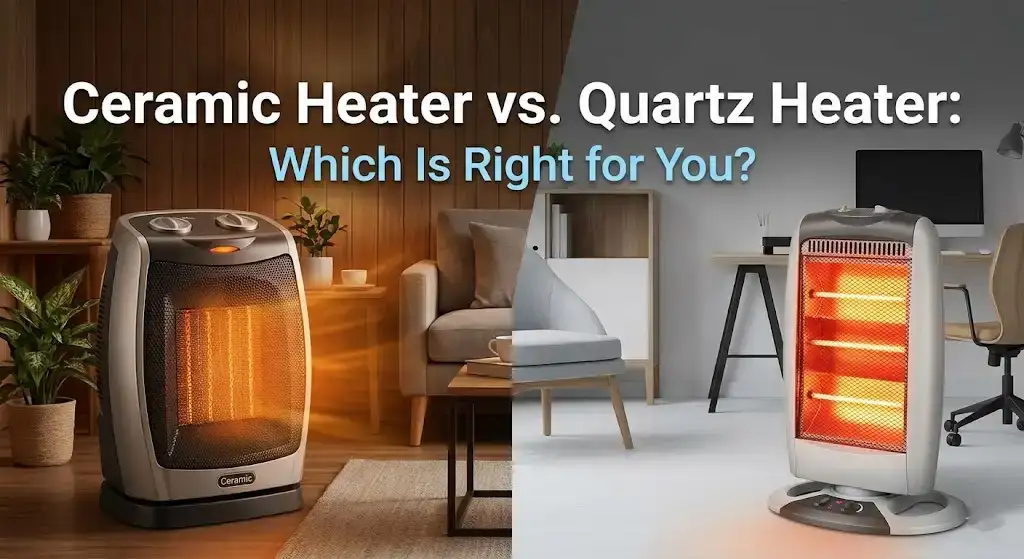
Spending cold nights is not possible without an HVAC system. But sometimes, one can face some situations where there is no availability of a heating system. Using fire could be toxic and dangerous in a place like a cabin or a room full of inflammable goods. Therefore, the only thing left to keep the body warm is a portable heater. That small heater can keep a person warm for hours, and all it requires is power support. Since there are two types that are very common, it could be a dilemma to choose one. Ceramic heaters and quartz heaters are those types, and both are user-friendly and portable choices. If you want to make a better choice without regret later, here are the following features of each type for you. Now, you can decide which one is better for your needs.
It is a type of infrared heater that focuses on releasing heat in the form of infrared rays. The quartz heater is popular in many households where people need a portable heating solution. That is good enough for small rooms or places where one needs direct heating. Here is the core function and basic mechanism of this type.
The infrared heating waves are released from the heater in the form of short wavelengths. There are tungsten rods and quartz glass tubes for the heat flow process. These glass tubes release infrared waves in straight lines to heat the object in front of them. The energy conversion process is fast in them, which reduces the heating time. That is like an instant heating solution where, instead of an entire room, a person in front of them is heated.
That direct heating keeps the objects and persons sitting right in front of the heater. Quartz heaters do not heat up the surroundings, but anything in front of them. However, if the room is small and there is no entrance of cold wind, the room will probably lose its cold after some minutes. Therefore, smaller rooms with a quartz heater can get some stability in temperature if it is used for some hours.
They are energy efficient in some ways. The efficiency of heat conversion from electricity is almost 100%. Whatever electricity these heaters receive, they convert all of it into heat. That makes them energy-efficient heaters in some ways. However, if someone is living in a country where electricity is way more expensive, these quartz heaters might not be a good choice.
Within a few seconds, quartz heaters can start heating a person in a room. They don’t wait for anything to heat and then release it outside. Whatever energy comes into the system, it makes the tungsten bulb release infrared heat quickly. Around 700 degrees to 2400 degrees centigrade temperature of the coil runs through the system. Quartz heaters do this fast conversion of electricity into heat through their efficient mechanism. That mechanism makes them a suitable choice for many households that can’t afford large heating systems.
Quartz heaters do not make any noise since there is no fan or similar noise-making component inside. Their operations are quiet because of that, and that makes these heaters ideal for bedrooms. People who want to use small heaters with quiet operations often use these heaters. The energy conversion and transmission processes are quiet for peaceful sleep. Not only that, people like to use them for studies, work, and anything that needs a quiet environment.
The upfront cost of quartz heaters is low because of traditional technology. This technology has been in the market for decades, and this is why the upfront cost is not much. Many households can easily afford them for their simple designs and mechanisms.
However, the operational cost could be high because they continuously source electricity for the energy conversion process. Modern quartz heaters have regulators in them, which help users to reduce continuous electric consumption. Also, the temperature control settings allow them to avoid overheating.
Then there is a different type of ceramic heater, which also runs on an infrared heating system. The heating system is efficient and also operates consistently. What makes ceramic heaters suitable in many households is the following features.
These heaters also convert the electrical energy into heat waves. Their mechanism is slightly different as they have ceramic plates inside. The rods convert electricity into heat and then pass it into these plates. This is positive temperature coefficient technology, which helps ceramic heaters succeed. This technology makes the ceramic plates release heat waves to warm the surroundings.
The first version is without a fan, where the heatwaves are released by hot ceramic plates. They heat the surroundings, which makes them suitable for small rooms. When multiple people are in a room, this type of ceramic heater is suitable for balanced heating. Then every person near the heater will get balanced heat.
The other type has a fan in it. That fan directs the heat towards whatever is in front of it. This one with a fan provides targeted heating faster than even the quartz type. The fan increases the efficiency of the heater in spreading the heat farther. As a result, the heat could reach people sitting around it if there is a rotational option.
Energy Efficient Through Thermostat
The energy efficiency is also good in ceramic heaters because of the thermostat option. The PTC technology in ceramic heaters helps them manage the temperature through it. Also, users can adjust the temperature through controls available in the heater.
Users find themselves safer near the ceramic heaters than the quartz heaters. The reason behind that is the ceramic plates, which are less dangerous than quartz bulbs. Touching the hot ceramic is less harmful than tungsten bulb or metal rods. That is why some households prefer to use ceramic heaters if they have kids and pets.
Overheat Protection
Likewise, the positive temperature coefficient technology prevents overheating. The ceramic plates stop taking energy when they reach a specific level of temperature. The prevention of overheating leads to safe usage and less energy use. People who have pets are often at risk of accidents near portable heaters. However, ceramic heaters pose much less risk of accidents compared to other types.
The upfront cost of ceramic heaters is slightly high. The reason is the use of sophisticated ceramic plates in them. But if we discuss their operational cost, it is low. The reason is the auto-adjustment of temperature in the ceramic heaters. After the ceramic plates reach their optimum temperature, they stop taking in more electricity, unlike other types.
There are some conditions that will affect your decision. These conditions are the size of the room, the size of the heater, its portability, energy efficiency, features, and price. You can find many models available in the market, and some of them have more options than others. Remote temperature controls and even mobile application-compatible heaters are available.
If you have a problem with a high electricity bill, you can find one that takes less energy. A ceramic heater could be a better choice, but it all depends on your preference. If you are choosing a single person where you don’t have to heat the entire room, a fanless heater will be better. A simple design will also require less maintenance.
The difference between quartz and ceramic heaters is the mechanism. One contains a quartz bulb, and the other contains ceramic plates. A quartz heater can do direct heating, and a ceramic heater is suitable for surrounding heating at a very short range. Both are suitable choices for small rooms, and both are quiet. However, quartz’s price is slightly less than that of a ceramic heater. If we look at maintenance costs, a ceramic heater may be more cost-effective, convenient, and safer in rooms. You can use this guide to decide which one fits your needs.
Spending cold nights is not possible without an HVAC system. But sometimes, one can face some situat...
READ FULLSemiconductor packaging is the foundation that determines whether a chip succeeds or fails in real-w...
READ FULLWe are proud to participate in GOACON 2026 in Gujarat, showcasing our Ceramic Femoral Head and Liner...
READ FULL